
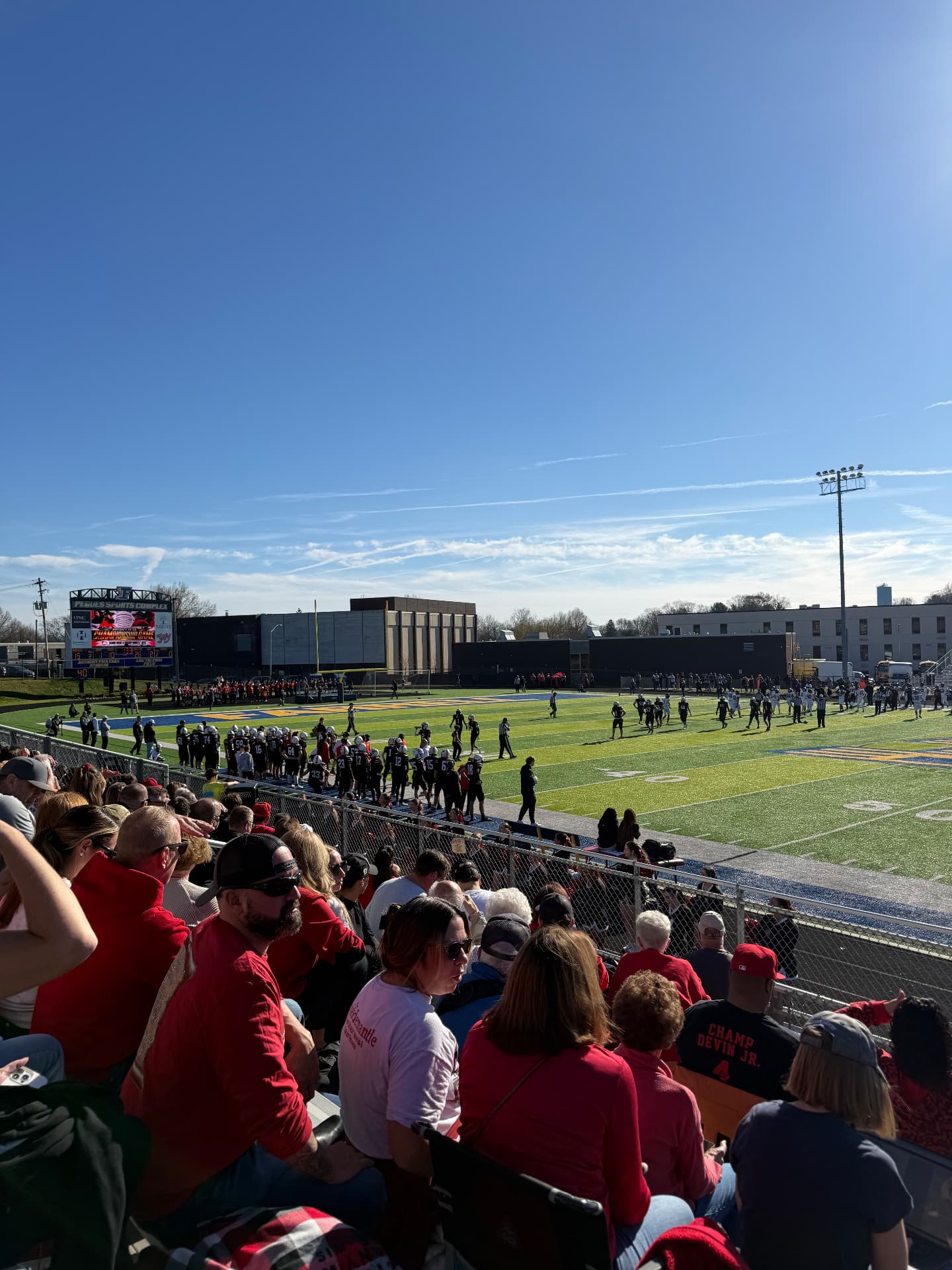
Friday night. Anytown, USA. Follow the lights.
The parking lot is full by 6:30. The local pizza shop can't make pies fast enough. Half the town is wearing the same two colors.
It's not just a football game. It's a town meeting with a scoreboard.
Sports build community in four ways. They stimulate the economy. They build pride. They give kids a place to belong. And they keep the whole thing going, one generation at a time.
Economic driver
It's bigger than you think. Sports travel generated $111.2 billion in direct spending across the U.S. in 2025. And here's the kicker - youth and amateur events drove the larger share ($60.1 billion), not the pros. This isn't all good news though - we will chat about the problems with this shift later!
Every weekend tournament fills hotel rooms, restaurants and gas stations in towns that will never host an NFL game. Closer to home, it's the concession stand paying for the band trip. The booster club buying new uniforms. Local small businesses sponsor teams and radio broadcasts.
A game gives people a reason to leave the house, come downtown and spend money with their neighbors. That matters.
Hometown pride
On December 27, 1975, Steelers broadcaster Myron Cope asked fans to bring yellow dish towels to a playoff game against the Baltimore Colts. They did, and a few weeks later Pittsburgh won the Super Bowl. The Terrible Towel became the most famous rag in sports. In 1996, he gave the Terrible Towel trademark to what is now Merakey Allegheny Valley School, which supports people with intellectual and developmental disabilities, including his son, Danny. More than $10 million from officially licensed Terrible Towel products has since benefited the school. A piece of team pride became a way for a whole region to take care of its own. That's the Western Pennsylvania I love.
You don't need a Super Bowl to feel it. It's the storefronts painted before a playoff run. It's the 80-year-old who still says "we" when he talks about the high school team. Whether your team is the local high school or the closest pro franchise, it gives people with nothing else in common something to share.
A place to belong
This one matters most.
For a lot of kids, a team is the first place outside their family where somebody is counting on them. Show up. Know the play. Cover your teammate. That's a big deal.
The research agrees. Kids who play team sports report noticeably lower levels of anxiety, depression and social problems than kids who don't play at all.
I've seen it more times than I can count - and for me it's absolutely the best part of coaching. A team tells a kid what every kid needs to hear: you belong here, and you matter to us.
The next ones up
Watch the little kids at a varsity game. They're not watching the scoreboard. They're watching the point guard. The goalkeeper. The kid wearing the number they want someday. To an eight-year-old, the varsity point guard might as well be playing in the NBA.
Then - faster than any parent is ready for - they're the ones under the lights. Now the little kids are watching them. They help run the youth camp. They high-five the same small hands. A few years later, they're back as coaches, boosters and parents in the stands.
Over and over again. Every senior class was once a row of eight-year-olds in the bleachers.
Which is exactly why the way a program is run matters so much. And why coaches have a much greater responsibility than just winning games. The little kids emulate everything - how the varsity practices, how it treats officials, how it wins and how it loses. Well-run programs build well-run communities.
The money keeps the lights on. The pride fills the bleachers. The belonging is why it matters. And the cycle is why it lasts.
So tell me - what does your town's team mean to you?
Share